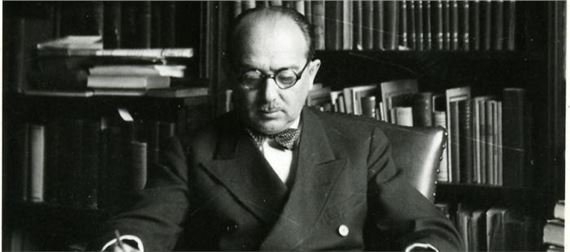
Introduction to Hans Kelsen
Hans Kelsen is a person whose contribution to jurisprudence cannot be overlooked. The works of Hans Kelsen have led to heated arguments, have been used in laws, and have been widely analyzed by many scholars around the world. Hans Kelsen was born in 1881 in Prague and his life path took him across Europe making him a renowned legal philosopher.
What are the major works by Hans Kelsen? One of the distinguishing characteristics of Kelsen is his Pure Theory of Law that is based on separation of law from ethics and politics. This is achieved with the help of a Grundnorm or Basic Norm.
In the world in which laws dominate society and sometimes are confused with morals and politics, Hans Kelsen gives food for thought. They make one think about justice, legality, authority and other related notions. Learn more about the legacy of Hans Kelsen in this essay!
Pure Theory of Law to the Hans Kelsen
Another interesting legal theory is that of Pure Theory of Law, advanced by Hans Kelsen. It offers a unique perspective of viewing legal systems. The Pure Theory of Law distinguishes law from all non-legal elements such as ethics and politics. This helps in the analysis of legal aspects.
According to the pure theory, law can be described as a system of norms that regulate people’s conduct and which are independent of all outside influences such as ethics. In order to develop an objective perspective on analyzing laws, Kelsen’s pure theory focuses only on legal validity.
An important aspect in the theory of pure law is the idea of “Stufenbau” or hierarchical arrangement. In this theory, laws are arranged hierarchically in ascending order up to the foundational norm referred to as Grundnorm.
In simple terms, laws are organized in such a way that they depend on one another where those at the top level are more fundamental than those below.
Understanding the Basic Norm to the Hans Kelsen
The Basic Norm, otherwise referred to as the Grundnorm, is a very important feature of the Pure Theory of Law introduced by Hans Kelsen. It forms the basis of all law systems and without which laws have no legitimacy.
That is an abstract but highly relevant concept where the Basic Norm provides legitimacy to the laws through being the source of authority. It isn’t written as other legal statutes but exists only in the awareness of the people collectively forming society.
According to Kelsen, all valid legal orders had to justify their legality based on the Basic Norm concept. The Basic Norm has been very instrumental in changing the way we view law and its connection with moral or social norms.
Understanding the Basic Norm will assist in knowing the reason for acceptance or rejection of certain laws.
Who Is Hans Kelsen?
Hans Kelsen was born in 1881 in Prague, which was then a part of Austria-Hungary. He later became one of the greatest legal scholars in the 20th century. In his academic career, he taught and researched in Europe until he finally moved to the United States.
Kelsen is also famous for his involvement in constitutional drafting. He made great contributions to constitutional thought in Austria and worked as a judge in the Constitutional Court of Austria in the initial years of the Austrian First Republic.
Kelsen and Constitutional Law
Hans Kelsen shaped constitutional thinking in a few key ways. One of his main points was that constitutional review should be carried out by a separate court. He believed that judges, acting independently, could check if a law fits the constitution.
You can also see his impact in how many states later built a centralized court system. This shows up in several legal traditions in mainland Europe.
Because of this, his views are not just theory for its own sake. They touch day to day issues too, like who should have the last word on constitutional matters. They also connect to questions about judicial review, lawmaking power, and how the state is organized.
The Pure Theory of Law
Hans Kelsen is linked with what people call the Pure Theory of Law.
Kelsen felt that legal study should focus on how legal rules are formed and how they gain validity.
He did not want the theory to rely on moral claims or on the details of daily society.
Put another way, his method pushes you to ask:
What makes a rule count as law?
How do rules connect to each other?
Where does the power of one rule come from?
What sets a legal order apart from other rule based systems?
Because of this work, Kelsen became a key name in modern legal positivism.
The Concept of the Grundnorm
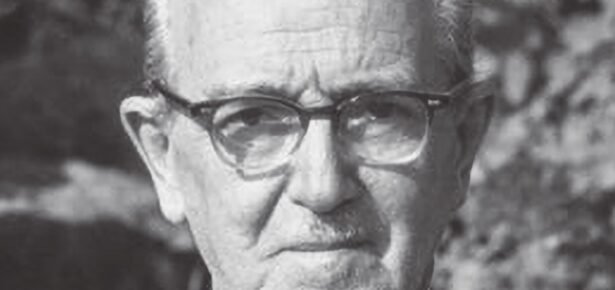
Kelsen’s idea of the Grundnorm is one of his most cited points. The term is usually rendered in English as “basic norm.”
In his view, a legal order works like a ladder of rules. Rules lower down count as legally valid because rules above them give them that status. So, agency rules may be grounded in statutes. Those statutes, in turn, are tied to what the constitution sets out.
At the very top sits the Grundnorm. It serves as the core assumption that lets you make sense of why the whole system is valid.This idea has sparked lots of debate in academic writing. It still shows up often in classes on legal theory.
Kelsen and Constitutional Law
Hans Kelsen shaped constitutional law in a clear way. He argued for constitutional review. In his view, a special court should be able to check statutes. That court would then decide if the laws match the constitution. Many later systems took this direction. You can see it in the centralized court approach.
This model is common in parts of continental Europe. Kelsen did not only write about theory. His work also fits real legal problems. These include who has the final say under the constitution. They also include how courts review legislation. In addition, they touch on the limits of legislative power and how government is set up.
Purpose and Function of the Basic Norm
The Basic Norm, as it was known under Kelsen’s name Grundnorm, plays a crucial part in the structure of the law. It is a principle that gives legitimacy to all other legal norms. Without the Basic Norm, the laws wouldn’t have any legitimacy.
Firstly, the Basic Norm creates coherence and stability because it makes sure that all laws are issued in a correct way and that all of them have an authorizing basis. Stufenbau theory demonstrates how the hierarchy of the laws is formed, showing that each legal norm is connected with the previous one.
You can also read about : Prajean
Additionally, the Basic Norm contributes to understanding of the law by people who use it – lawyers, judges and citizens can look back at the basic norm while working with statutes and different regulations.
Thus, by basing the legal systems on the Basic Norm, Kelsen made a focus on rationality rather than tradition and morality in legal systems.
Impact and Legacy of Kelsen’s work
There is no doubt that Kelsen left a huge imprint on the field of legal theory. The Pure Theory of Law revolutionized the perception of laws as something that is free from the interference of morality or society. As a result, it became possible to study the legal system in its purity and without any ethical prejudices.
The theory of Grundnorm proposed by Hans Kelsen provided an important basis, which remains relevant even nowadays. This theory provides an opportunity for studying normative structures systematically.
With the help of the concept of stufenbau, Kelsen showed how laws are hierarchical in nature. Moreover, his research was influential for studying constitutional law and international law in particular.
Kelsen had a lot of followers throughout history, who continue to study and apply his ideas in legal philosophy.
Final conclusion
Hans Kelsen is a key name in legal thinking from the twentieth century. Many scholars study him because of his Pure Theory of Law, his idea of the Grundnorm, and his work on constitutional and international law. Kelsen did not treat law as nothing more than orders.
He also did not reduce it to moral statements. Instead, he built a structured account of how legal rules count as valid, and how they fit in a hierarchy. Because of that, his ideas still come up when people talk about how legal systems work, and why some rules are taken as law in the first place.
Frequently Asked Questions
Who was Hans Kelsen?
Hans Kelsen was an Austrian jurist and legal philosopher best known for developing the Pure Theory of Law. He made major contributions to jurisprudence, constitutional law, and international law.
What is Hans Kelsen famous for?
Kelsen is primarily known for his theory of legal positivism, the Pure Theory of Law, and the concept of the Grundnorm, or basic norm.
What is the Pure Theory of Law?
The Pure Theory of Law is Kelsen’s attempt to study law as an independent system of legal norms. It separates the analysis of legal validity from questions of morality, politics, religion, and sociology.
Why is Hans Kelsen important in legal theory?
Kelsen is an integral part of the modern legal theory. His Pure Theory of Law made the emphasis on analysis of law as a separate concept, rather than on its moral and social aspects.
What do you know about Grundnorm?
Grundnorm (or Basic Norm) is a major concept in Kelsen’s theory. It acts as the fundamental rule, which gives legitimacy to all other rules in the legal system.
How is Stufenbau theory connected to the Kelsenian concepts?
Stufenbau theory explains the hierarchy of laws, and how lower norms obtain their legitimacy through the hierarchy.
Has Kelsen impacted the contemporary jurisprudence?
Indeed, his theories are still significant in jurisprudence, and are constantly analyzed in relation to contemporary questions of legality and legitimacy in law.
Where can I find additional information on Hans Kelsen’s theories?
There is a lot of scientific literature on the Web concerning the biography of Hans Kelsen and his theories. You may read books like “Pure Theory of Law”.